Wire edm vs sinker edm which is right for you
Rapid Manufacturing
Author
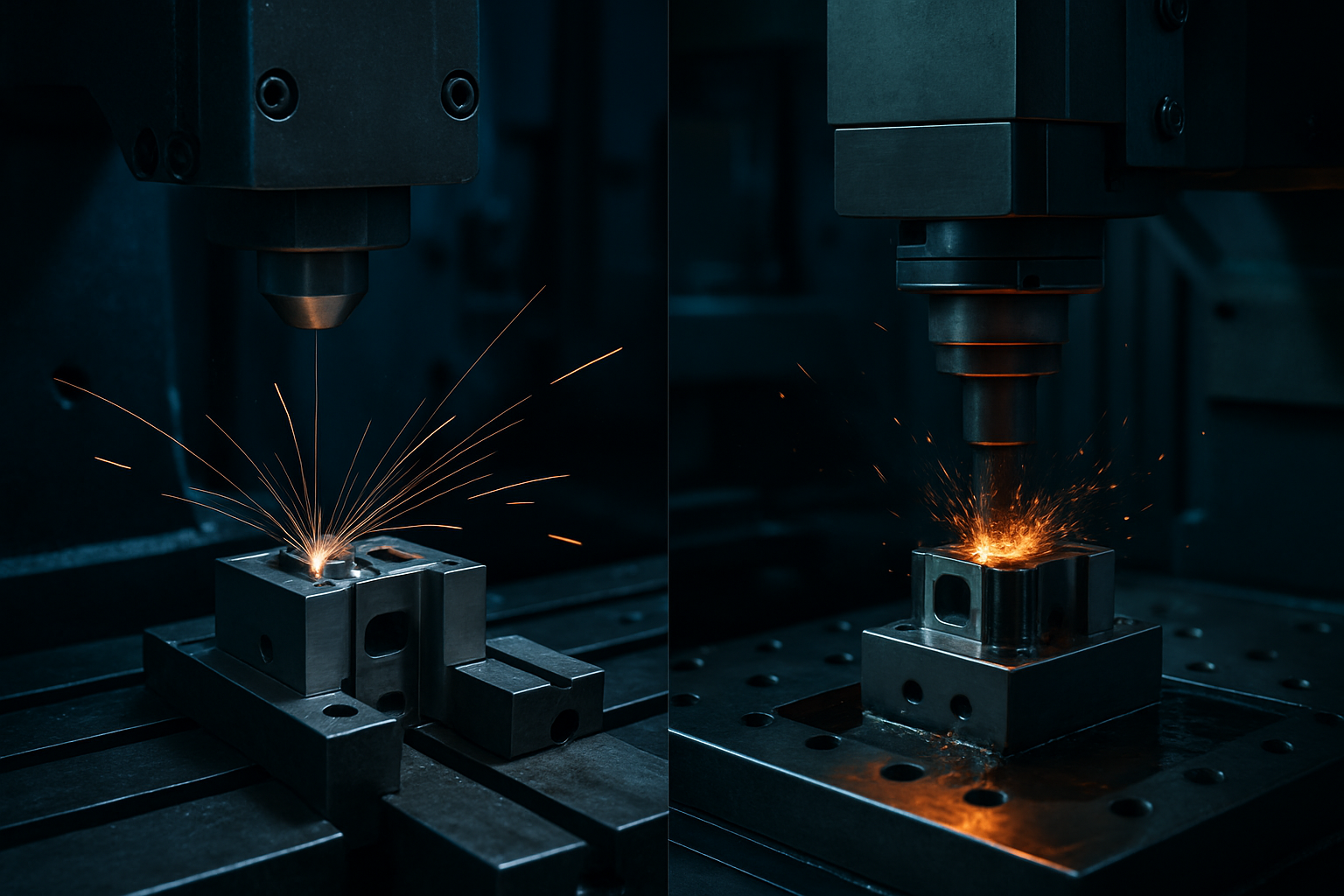
Choosing Between Wire EDM and Sinker EDM for Australian Manufacturing
Electrical Discharge Machining (EDM) is a vital process in manufacturing precision parts, with two primary methods: wire EDM and sinker EDM. Both offer unique advantages depending on your specific needs and the characteristics of your projects. Here’s how to make an informed decision based on typical Australian industrial contexts.
Wire EDM for Precision and Flexibility
Wire Electrical Discharge Machining (WEDM) is renowned for its ability to achieve incredibly fine tolerances, typically in the range of ±0.01 mm. This makes it ideal for creating complex geometries like gear teeth or intricate molds where precision is paramount. Australian manufacturers often use WEDM for aerospace components and medical devices, given their stringent requirements.
- Cost: While initial setup costs are high due to specialized equipment ($250k-$450k), operating costs remain relatively low once up and running.
- Materials: Commonly used materials include hardened steels (up to HRC 65) and titanium alloys, which require such precise machining. For instance, stainless steel 316 can be machined efficiently with WEDM due to its thermal conductivity.
Sinker EDM for Forming Complex Shapes
Sinker EDM or ram EDM is excellent for forming complex shapes that are hard to achieve through other methods. This process involves the use of a graphite electrode that matches the negative profile of the desired cavity, making it ideal for creating detailed molds and dies. In Australia, sinker EDM is often used in industries such as automotive manufacturing and toolmaking.
- Cost: The initial cost of setting up sinker EDM equipment ($200k-$400k) can be substantial but offers high returns for production runs over 100 units.
- Materials: Sinker EDM works well with materials like hardened steel (up to HRC 65), tool steels, and even carbide. For example, hard-faced molds made of A2 or D2 tool steel benefit greatly from sinker EDM's ability to maintain sharp edges.
Key Considerations for Australian Manufacturers
-
Material Availability: Given Australia’s robust supply chain, sourcing materials like aluminum 6061 at approximately $35/kg is feasible. However, more exotic metals might require special procurement processes.
-
Lead Times and Production Volume: Wire EDM can handle high volumes efficiently once the initial setup is complete, whereas sinker EDM may offer better cost efficiency for larger production runs over 100 units due to lower per-unit costs after amortizing equipment expenses.
Quick Reference: Key Specs for Decision-Making
-
Wire EDM
- Ideal Tolerances: ±0.01 mm
- Suitable Materials: Hardened steels (HRC up to 65), titanium, stainless steel 316
- Common Applications: Aerospace components, medical devices
-
Sinker EDM
- Ideal Tolerances: ±0.02 mm
- Suitable Materials: Tool steels (A2, D2), hardened steels, carbide
- Common Applications: Automotive molds, die casting
Practical Takeaway for Australian Professionals
When deciding between wire EDM and sinker EDM in an Australian context, consider both the specific requirements of your project—such as material hardness and geometric complexity—and the scale of production. For projects needing high precision with smaller quantities, opt for wire EDM. Conversely, choose sinker EDM when dealing with large-scale production runs where forming complex shapes is crucial.
By carefully evaluating these factors, you can select the most effective EDM process to meet your manufacturing needs efficiently and cost-effectively in Australia.
Free quote in 2 business days. No minimum order.