Scaling Your Prototype to Production with CNC Machining Tips
Rapid Manufacturing
Author
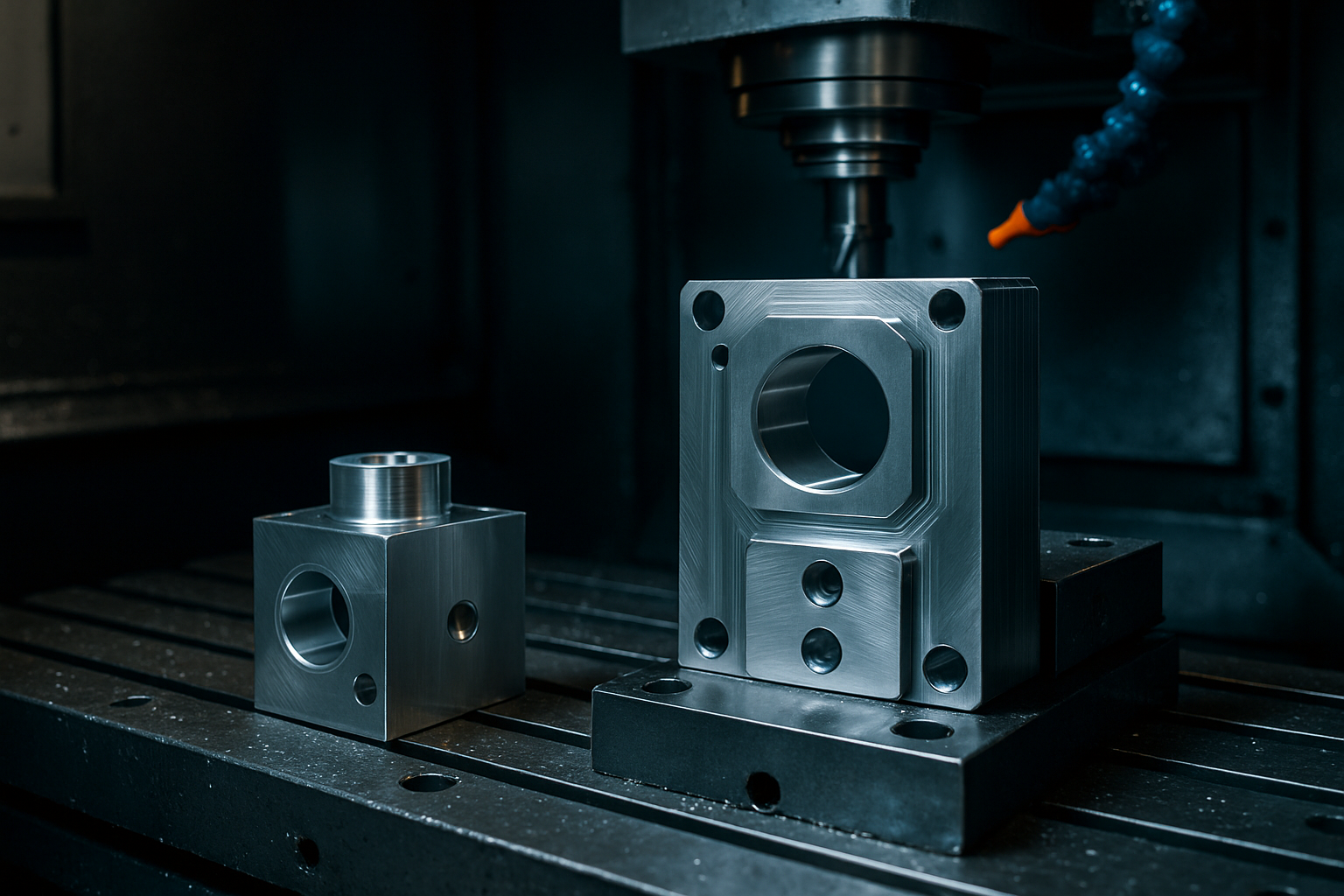
Scaling from Prototype to Production: CNC Machining Considerations for Australian Engineers and Manufacturing Professionals
Transitioning a prototype into full production using CNC machining is a critical step in any product development process. This phase involves numerous considerations that can significantly impact cost, quality, and delivery timelines. Here’s an overview of key factors to consider when scaling your project from the lab bench to manufacturing lines.
Material Selection for Production Quality
Selecting the right material is crucial as it directly affects performance, durability, and production costs. In Australia, common choices include aluminium 6061, stainless steel 316, titanium, and PEEK (polyether ether ketone).
- Aluminium 6061: Ideal for lightweight components with good strength-to-weight ratio. Billet prices range from $25 to $45/kg.
- Stainless Steel 316: Offers excellent corrosion resistance and durability, suitable for marine or high-wear environments. Costs approximately $70 to $130/kg.
- Titanium: High-performance material with superior strength-to-weight ratio but expensive at around $500–800/kg.
- PEEK: A versatile engineering plastic with excellent chemical resistance and mechanical properties, typically priced between $800 to $1,600/kg.
When choosing a material, balance your requirements for weight, cost, durability, and environmental conditions. Always specify the exact grade of metal or polymer you need based on its unique mechanical properties.
Avoid Common Pitfalls During Scaling
Several common mistakes can derail production efforts:
- Overlooking Material Properties: Not understanding the full range of physical characteristics (e.g., thermal expansion) can lead to unexpected warping and fitting issues.
- Neglecting Dimensional Tolerances: Tighter tolerances increase costs dramatically. Ensure your design specifications align with functional requirements, aiming for ±0.1mm tolerance where possible but no stricter unless absolutely necessary.
- Underestimating Lead Times and Costs: Australian CNC machining shops typically operate within a rate range of $120 to $300 per hour. Factor in material procurement delays and the potential need for secondary operations like heat treatment or surface finishes.
Decision Frameworks for Production Feasibility
Making informed decisions about production feasibility involves understanding trade-offs between cost, time, and quality:
- Choose aluminium 6061 when weight and cost are critical, especially if corrosion resistance is not a primary concern.
- Select stainless steel 316 when durability and chemical resistance are paramount in marine or harsh environments. Stainless can be more expensive due to higher material costs and machining difficulty.
- Opt for titanium when high strength-to-weight ratio is essential, but only if the project budget allows for its high cost.
Quick Reference: Key Specs and Decision Points
- Material Choice: Aluminium 6061, Stainless Steel 316, Titanium, or PEEK
- Tolerances: ±0.1mm as a general guideline unless application-specific requirements dictate tighter tolerances.
- Cost Estimation: Material billet costs from $25 to $800/kg; machining rates $120–$300/hr.
- Lead Times: Consider material procurement and machining lead times for realistic production schedules.
Applying What You've Learned
To start applying these insights immediately, revisit your current project specifications with a critical eye towards material properties and dimensional tolerances. Conduct a cost-benefit analysis to ensure that chosen materials align with performance goals without compromising budget constraints. By doing so, you can enhance the scalability of your prototype into full production while maintaining quality standards.
This approach not only helps in managing expectations but also fosters better collaboration between engineers, procurement managers, and manufacturing teams in Australia’s unique industrial landscape.
Free quote in 2 business days. No minimum order.