Die Casting vs CNC Machining Cost Quality Comparison
Rapid Manufacturing
Author
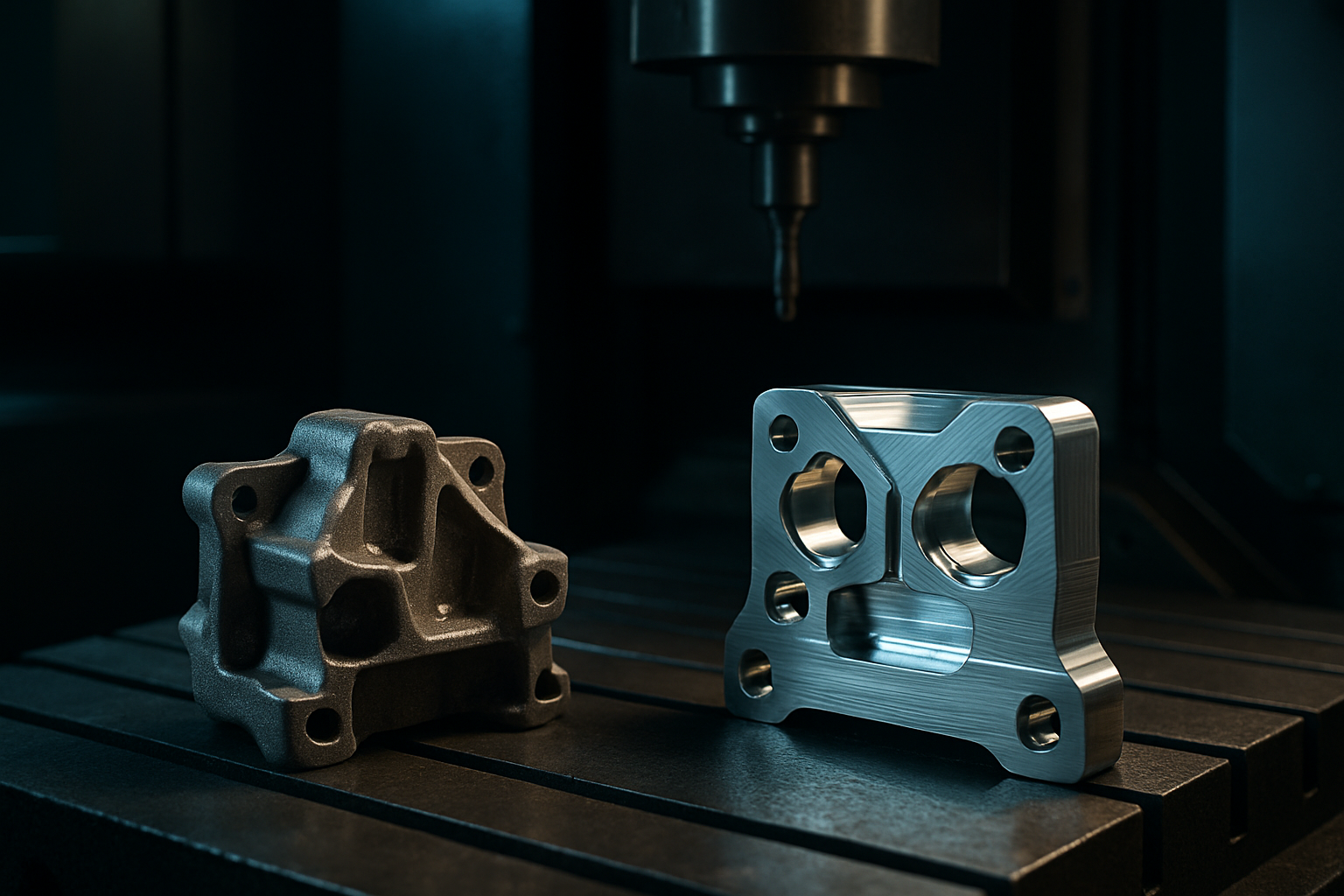
Die Casting vs CNC Machining: Cost and Quality Comparison for Australian Engineers
When choosing between die casting and CNC machining for manufacturing metal parts in Australia, it's crucial to weigh both cost and quality considerations against your specific project requirements. This article will help you understand the key differences and decision points based on practical experience.
Cost Analysis
The cost of producing a part via die casting or CNC machining can vary widely depending on several factors such as material type, volume, complexity, and lead time. Let's break down these aspects:
Material Costs:
- Die Casting: Aluminium alloys like 380 are commonly used due to their excellent castability and cost-effectiveness. For a small run of parts (1–5 kg), expect the billet material to cost approximately $25–45/kg.
- CNC Machining: High-strength materials such as Stainless Steel 316 can be machined from solid billets, priced at around $70–130/kg.
Manufacturing Costs:
- Die Casting: Initial tooling costs can range from $5,000 to $20,000 AUD depending on the complexity of the part. Once the mold is set up, production costs are relatively low, approximately $0.60–$1.20 per kilogram for large quantities.
- CNC Machining: Machine time rates in Australia typically range from $120 to $300 AUD/hour. For a simple part with no complex features and made of Stainless Steel 316, expect machining costs around $500–$700 per piece for small batches (1–10 units).
Volume Considerations:
- Die Casting: Economies of scale kick in quickly; die casting becomes highly cost-effective starting from runs of over 50 parts.
- CNC Machining: Ideal for low-volume production or prototyping where quick turnaround is essential, especially for complex geometries.
Quality and Precision
Both processes have their strengths when it comes to achieving high-quality standards:
Die Casting:
- Offers excellent repeatability; once a mold is created, every part will be nearly identical.
- Can produce intricate shapes with thin walls (0.5 mm) and tight tolerances of ±0.1 mm for standard parts.
- Surface finish can range from rough (Ra 2–3 μm) to fine (Ra 0.8–1.6 μm), depending on the casting process.
CNC Machining:
- Provides unmatched precision, capable of achieving tolerances as tight as ±0.05 mm for machined parts.
- Allows for superior surface finishes ranging from rough (Ra 2.0 μm) to polished (Ra 0.1 μm).
- Suitable for materials that are difficult or impossible to cast, such as titanium and high-strength stainless steels.
Decision Framework
To decide between die casting and CNC machining, consider the following criteria:
Choose Die Casting When:
- You need a large volume of parts (50+ pieces)
- The part geometry is complex but can be easily replicated in a mold
- Cost efficiency is critical over initial production runs
Choose CNC Machining When:
- Production quantities are small or for prototype builds
- High precision and tight tolerances are required
- Working with materials that are hard to cast, such as titanium or superalloys
Quick Reference
- Die Casting: Best for large volumes (50+), cost-effective tooling once initial investment is made.
- CNC Machining: Suitable for small batches (<50), intricate geometries, and high precision requirements.
Practical Takeaway
When deciding between die casting and CNC machining, start by evaluating your production volume needs. For small runs or prototyping, CNC may offer better flexibility and precision. However, for larger volumes where cost efficiency is key, die casting can provide significant savings while maintaining acceptable quality levels tailored to Australian standards and supply chain realities.
By understanding these nuances, you'll be well-equipped to make an informed decision that balances both the financial and technical aspects of your manufacturing project in Australia.
Free quote in 2 business days. No minimum order.