Die Casting vs CNC Machining Cost Quality Battle
Rapid Manufacturing
Author
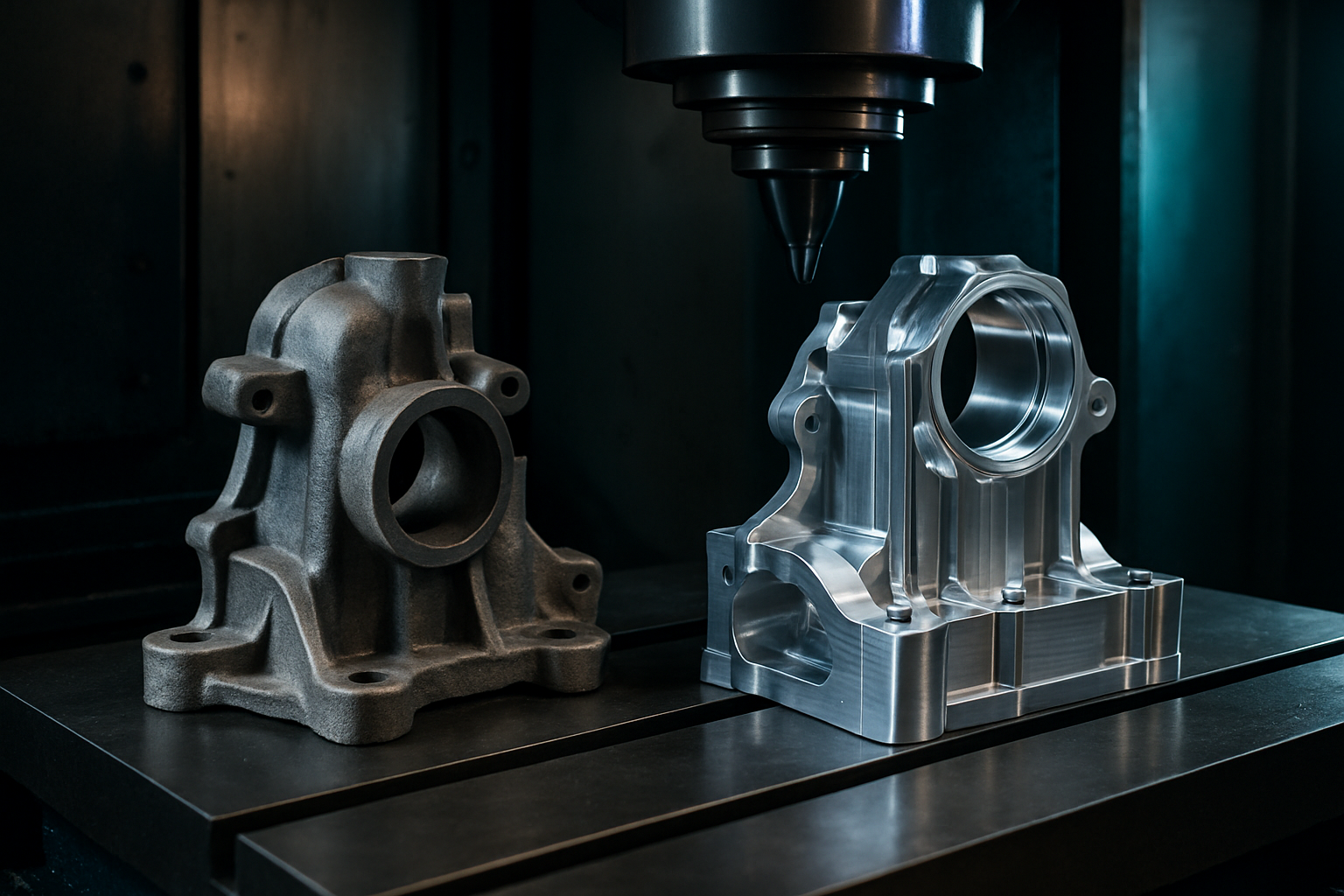
Die Casting vs CNC Machining: Cost and Quality Comparison for Australian Manufacturing
When selecting between die casting and CNC machining for producing metal parts in Australia, manufacturers must carefully weigh cost implications against quality requirements and production timelines. This comparison aims to provide clear guidance on the best choice for various scenarios.
Material Selection and Costs
Material selection is critical, as it significantly impacts both the process chosen and the final product's performance. For instance, aluminium alloys like 6061 are ideal for die casting due to their excellent fluidity and ability to form intricate shapes with tight tolerances. The cost of raw material for aluminium 6061 in Australia is approximately $25–45/kg.
Stainless steel (e.g., 316) can be used in both processes but may incur higher costs, especially for CNC machining due to the material's hardness and machinability challenges. Stainless steel 316 typically ranges from $70–130/kg locally.
For high-strength applications requiring lightweight materials, titanium or advanced plastics like PEEK might be necessary, though these are much more expensive. Titanium costs around $500–800/kg in Australia, while PEEK is approximately $800–1,600/kg.
Cost Analysis
Die Casting
- Tooling Costs: Initial tooling for die casting can be substantial due to the need for hardened steel molds and complex cooling systems. For medium-sized parts, expect tooling costs in the range of AUD 5,000–20,000.
- Production Costs: Once up and running, die casting is cost-effective for high-volume production (over 1,000 units). Per-unit costs decrease as volume increases. For a medium-sized part, ongoing costs might be around $1–3 per unit in Australia.
CNC Machining
- Tooling Costs: CNC machining typically requires less upfront investment in tooling compared to die casting. However, this is offset by higher raw material consumption.
- Production Costs: Per-unit cost increases with complexity and volume decrease. For medium-sized parts produced in small batches (under 100 units), the per-unit cost can range from $30–50 AUD due to slower machining rates and higher material wastage.
Quality Considerations
Die Casting
- Die casting offers excellent dimensional stability, high production speeds, and tight tolerances suitable for mass-produced parts. Parts often have a smooth surface finish right out of the mold.
- Common mistakes include underestimating tooling costs or failing to account for scrap metal losses during part ejection.
CNC Machining
- CNC machining provides greater design flexibility with complex geometries and tight tolerance control (+/- 0.1 mm). It’s ideal for low-volume production runs where rapid prototyping is necessary.
- Common pitfalls include ignoring the impact of material hardness on cutting tool wear or overestimating the benefits of subtractive manufacturing for simple, repeatable parts.
Quick Reference
- For high volume (over 1k units): Die casting (material: aluminium)
- For low volume (under 100 units) with complex geometries: CNC machining (material: stainless steel or titanium)
- High design flexibility and rapid prototyping: CNC machining
- Cost-efficient for medium to large parts in high volumes: Die casting
Practical Takeaway
When deciding between die casting and CNC machining, evaluate the specific requirements of your project. Consider factors such as material properties, production volume, and lead time constraints. For instance, if you're producing over 1,000 units of a medium-sized part made from aluminium alloy, die casting is likely more cost-effective than CNC machining despite higher initial tooling costs.
By aligning manufacturing methods with project demands, Australian manufacturers can optimize their operations for both efficiency and quality, ensuring competitive advantage in the local market.
Free quote in 2 business days. No minimum order.