Die Casting vs CNC Machining Cost Quality Battle
Rapid Manufacturing
Author
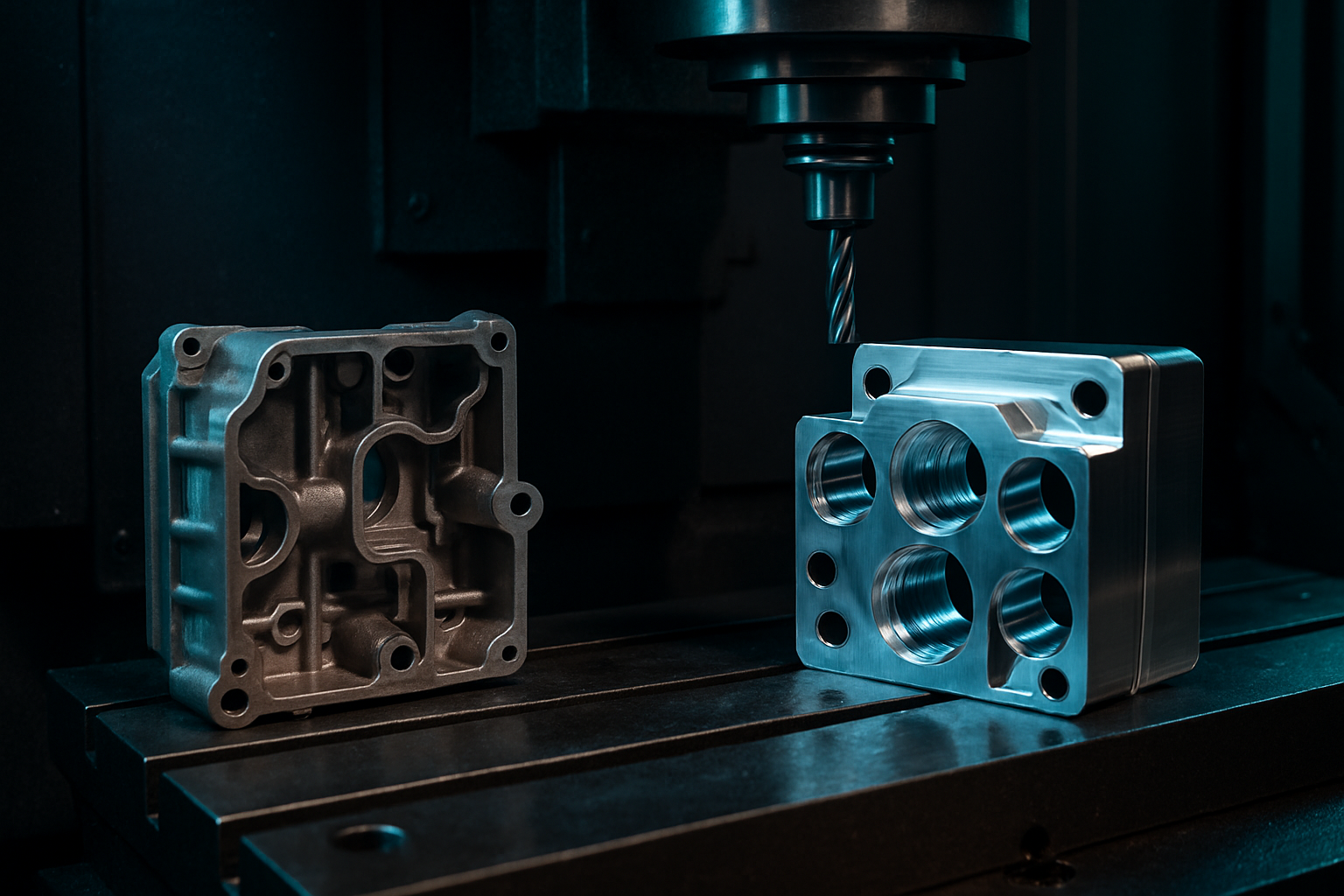
Die Casting vs CNC Machining: Cost and Quality Comparison for Australian Manufacturing Professionals
When choosing between die casting and CNC machining for your next manufacturing project, it's crucial to consider both cost implications and quality requirements. In Australia, these factors can significantly impact the overall success of a production run or component build. Here’s an in-depth look at how each process stacks up against the other.
Cost Comparison
Material Costs
- Die Casting: Die casting uses materials like aluminium alloys (e.g., AlSi12), zinc, and magnesium. In Australia, aluminium alloy costs approximately $45/kg. For a small production run of 100 parts weighing around 0.3 kg each, the material cost would be roughly $1,350.
- CNC Machining: CNC machining typically uses billet materials like aluminium 6061 (~$25–45/kg) and stainless steel 316 (~$70–130/kg). For a similar part weight of 0.3 kg made from aluminium, the material cost would be around $9 to $13.5 per piece.
Machine Costs
- Die Casting: The initial investment in tooling for die casting can range between AUD 10,000 and AUD 50,000 depending on part complexity. However, once the mould is ready, parts are produced relatively cheaply (around $2–$4 each in volume).
- CNC Machining: CNC machining has minimal initial setup costs but can be more expensive per piece for small runs due to material wastage and machine time rates ($120-$300/hr). For a small production run of 10 parts, the cost could range from $600 to $900 depending on the part's complexity.
Quality Considerations
Tolerances
- Die Casting: Typically offers tolerances between ±0.4 mm for non-critical dimensions and can go down to ±0.2 mm with extra machining, adding cost. Surface finish is usually 1.6 μm Ra.
- CNC Machining: Can achieve tighter tolerances of up to ±0.05 mm if required, making it suitable for precision parts. However, this comes at the expense of higher material costs and production times.
Post-Machining Operations
- Die Casting: Often requires secondary operations like polishing, machining, or coating to meet finish requirements.
- CNC Machining: Can achieve high surface finishes in a single operation with appropriate tooling, reducing the need for post-processing.
Decision Frameworks
When deciding between die casting and CNC machining, consider these factors:
- Production Volume: Choose die casting if you anticipate producing more than 10,000 parts to offset the initial mould investment.
- Tolerances Needed: Opt for CNC machining when tight tolerances (±0.05 mm) are essential for your application.
- Part Complexity and Geometry: Die casting is preferable for complex geometries that would be challenging to machine without extensive secondary operations.
- Material Properties: If high-strength, corrosion-resistant materials like stainless steel or titanium are required, CNC machining may offer better material options.
Quick Reference
- Die Casting:
- Suitable for large production runs (>10k units)
- Good for complex parts with tight tolerances
- Lower cost per piece in volume
- CNC Machining:
- Ideal for small to medium production volumes (<1,000 units)
- Achieves higher material strength and tighter tolerances
- Higher upfront costs but flexible material options
Practical Takeaway
Choosing the right manufacturing process can significantly impact your project's success. For Australian manufacturers, understanding local market conditions and specific application requirements is key. By leveraging this comparison framework, you can make informed decisions that align with your production goals while optimizing cost and quality outcomes.
For detailed cost estimates or further advice tailored to your project specifics, it’s recommended to consult with local suppliers and manufacturing experts who are familiar with Australian standards and supply chains.
Free quote in 2 business days. No minimum order.