CNC Milling vs Turning Whats Best For Your Part
Rapid Manufacturing
Author
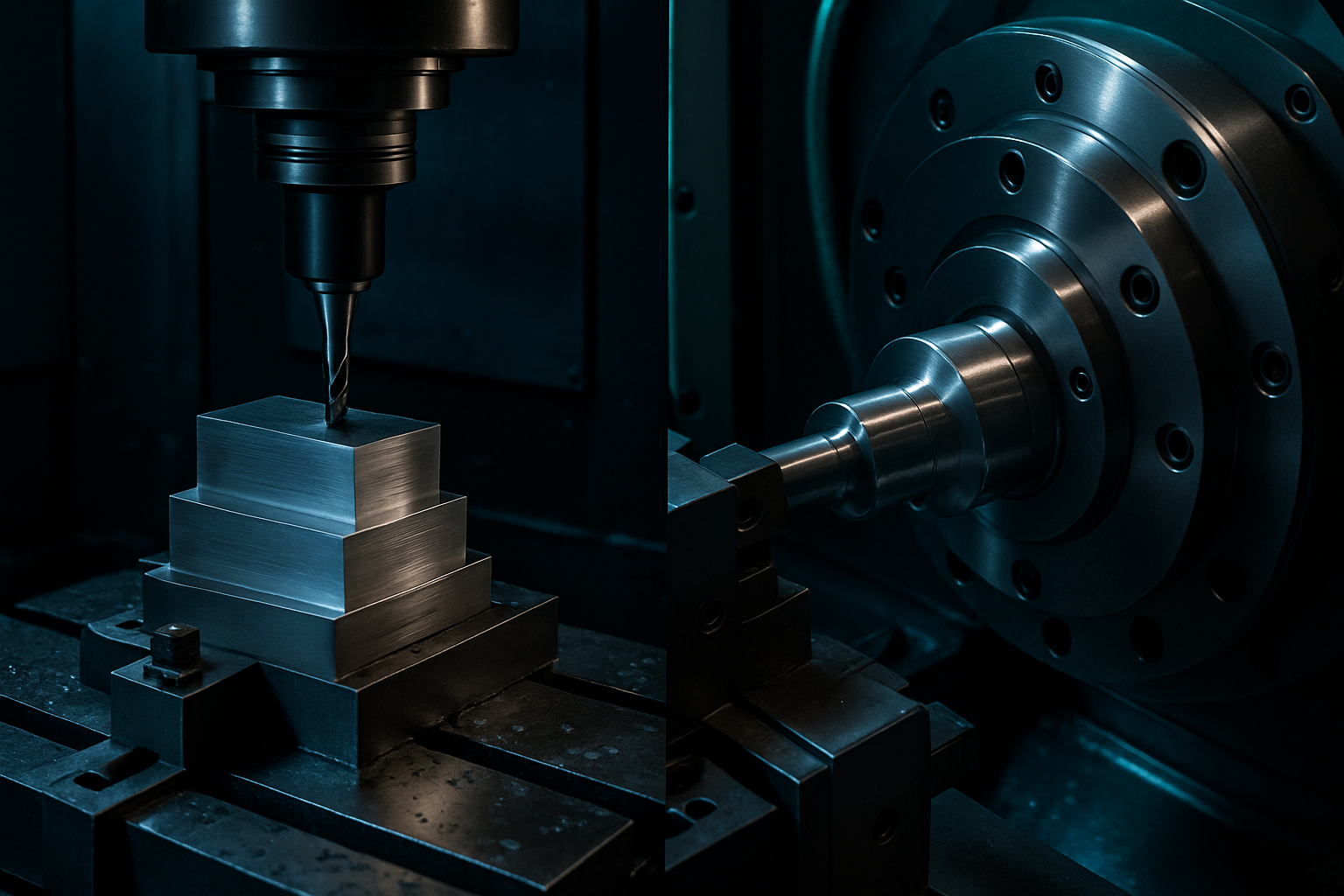
CNC Milling vs Turning: Choosing the Right Process for Your Part in Australia
As Australian engineers and manufacturing professionals, selecting between CNC milling and turning depends on several factors including material type, part geometry, cost, lead times, and specific application requirements. Both processes have unique advantages that make them suitable for different types of parts.
Material Considerations
When deciding whether to mill or turn a part, consider the material properties and its availability in Australia. For instance:
- Aluminium 6061: Commonly used due to its excellent machinability and low cost (~$25–45/kg). Milling is often preferred for intricate designs.
- Stainless Steel 316: Durable with high corrosion resistance, suitable for food or marine applications. Turning can be more efficient here if the part has rotational symmetry (~$70–130/kg).
- PEEK (Polyether Ether Ketone): High-strength and temperature-resistant plastic used in medical devices and aerospace parts (~$800–1600/kg). Milling is typically better for complex geometries.
Geometry and Design Complexity
The geometry of the part significantly influences which process to choose:
- CNC Milling: Ideal when your part features slots, pockets, or intricate profiles. For example, a gear with teeth requires milling to achieve the correct tooth profile.
- Turning: Best suited for parts that require high accuracy on cylindrical surfaces such as shafts, pins, and hubs.
Cost Analysis
Cost considerations are crucial in Australian manufacturing environments where material costs can be substantial:
- Milling Costs: Typically range from $120–300/hr depending on machine type. Complex geometries often mean higher lead times and machining hours.
- Turning Costs: Usually lower due to simpler operations, with typical rates also ranging between $120–$300/hr but generally requiring fewer total hours.
Common Mistakes and Decision Framework
Avoid common pitfalls by following these guidelines:
- Overlooking Material Properties: Always verify material compatibility before choosing a process. For instance, PEEK is not suitable for turning due to its poor thermal properties.
- Neglecting Part Complexity: Overly complex parts can be costly when milled but straightforward designs are less so.
Decision Framework:
-
Choose CNC Milling when:
- Your part has intricate shapes or features.
- The design requires precise slotting, drilling, or profile cutting.
-
Opt for Turning when:
- Parts have simple cylindrical geometries.
- High accuracy on diameters and tapers is required.
Quick Reference
- Material: Aluminium (6061) — $25–45/kg, Stainless Steel (316) ~$70–130/kg, PEEK ~$800–1600/kg.
- Machining Rates: Milling $120-$300/hr | Turning $120-$300/hr.
- Process Choice: Mill complex shapes; turn cylindrical parts.
Practical Takeaway
When deciding between CNC milling and turning, start by assessing the part's geometry and material properties. Use this framework to guide your selection based on specific design requirements and cost considerations. This approach will ensure you make informed decisions that align with Australian manufacturing standards and supply chain realities.
For more detailed advice or current pricing, consult with a local machining expert who understands regional market dynamics and can provide tailored guidance for your specific project needs.
Free quote in 2 business days. No minimum order.