CNC Milling vs Turning Whats Best For Your Part
Rapid Manufacturing
Author
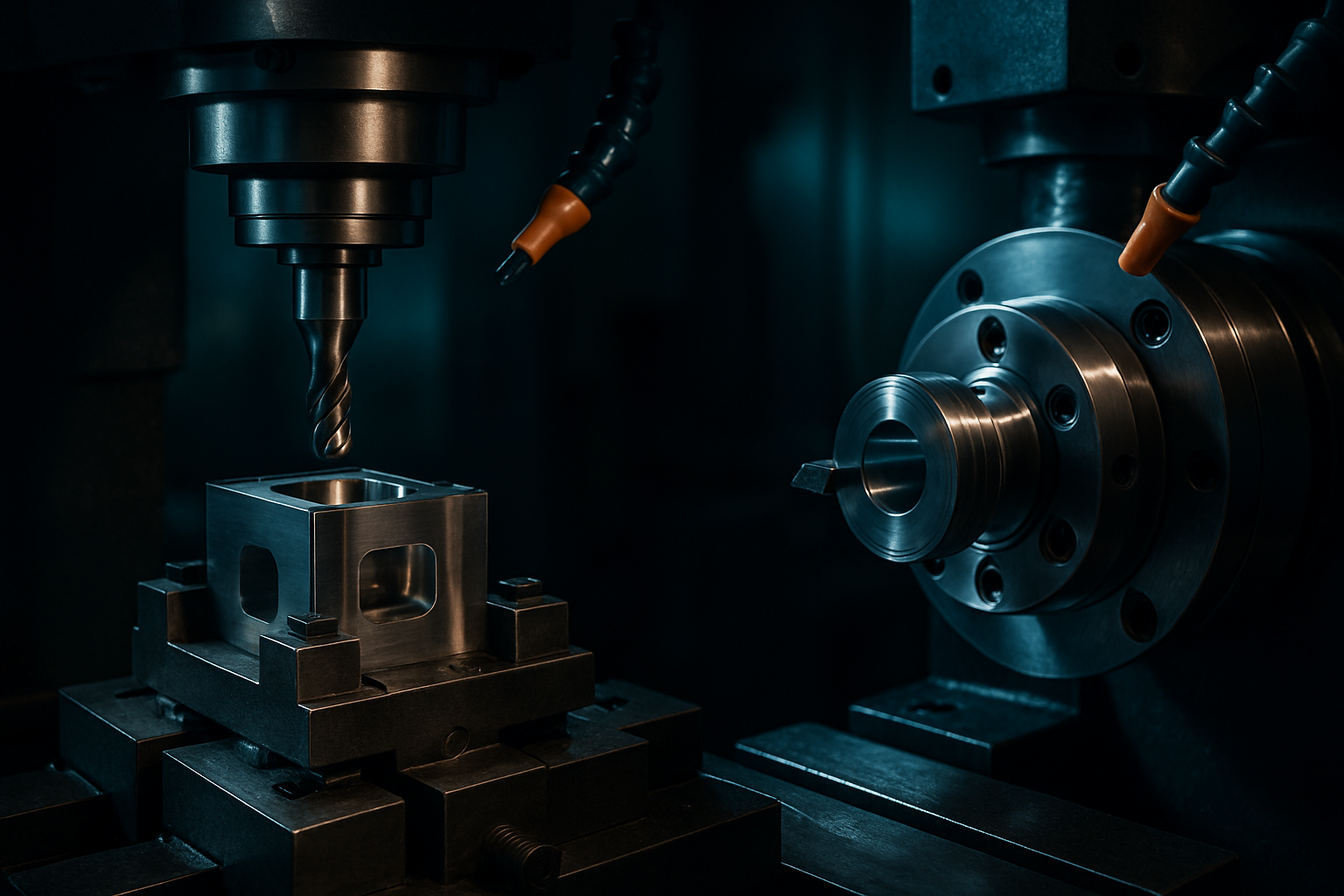
CNC Milling vs Turning: Which Process for Your Part in Australia?
When deciding between CNC milling and turning to manufacture your parts in Australia, it’s crucial to consider several factors that will impact both the quality of the final product and the overall cost-effectiveness of production. This guide outlines specific considerations tailored to Australian manufacturing contexts.
Understanding CNC Milling
CNC milling is a versatile process where a rotating cutting tool removes material from a stationary workpiece to create parts with complex geometries, including pockets, slots, and contours. In Australia, CNC milling shops typically operate machines ranging from small vertical mills for intricate components to large horizontal five-axis machines capable of handling heavy-duty aerospace parts.
Material Recommendations:
- Aluminium 6061: Widely used due to its excellent strength-to-weight ratio and ease of machining.
- Stainless Steel 316: Ideal for corrosive environments, such as marine applications or food processing equipment.
- Titanium: Used in aerospace and medical implants for its high strength and resistance to corrosion.
Common Mistakes:
- Overlooking the need for proper material support. Milling parts without adequate backing can lead to warping and poor surface finish.
- Ignoring the potential of tool wear, especially when machining hard materials like stainless steel or titanium.
Understanding CNC Turning
CNC turning involves rotating a workpiece against a stationary cutting tool that removes material from the part's exterior. This process is highly effective for creating cylindrical parts with tight tolerances and complex profiles.
Material Recommendations:
- Aluminium 6061: Excellent machinability makes it ideal for high-volume production.
- Stainless Steel 316: Suitable for manufacturing shafts, gears, or other components that require corrosion resistance.
- PEEK (Polyether Ether Ketone): Ideal for medical and semiconductor applications due to its biocompatibility and chemical resistance.
Common Mistakes:
- Failing to account for tool geometry. The cutting edges must be precisely shaped to handle the material being turned without overheating or causing work hardening.
- Not considering spindle speeds. Incorrect RPM can result in poor surface finish, chatter marks, or even part failure during machining.
Decision Framework
When deciding between CNC milling and turning, consider the following criteria:
Choose Milling When:
- Your part geometry is complex with features such as slots, pockets, or non-circular shapes.
- You need to produce small batches of intricate components where surface finish is critical (e.g., medical implants).
- The design includes internal features that cannot be achieved through turning alone.
Choose Turning When:
- Your parts are predominantly cylindrical and require tight tolerances on diameters and lengths.
- High-volume production of simpler geometries like shafts, gears, or threaded components.
- Part material is particularly challenging to mill (e.g., hardened steels).
Quick Reference
- Tooling Considerations: Milling requires a variety of end mills; turning depends heavily on the shape and size of the part.
- Material Costs: Aluminium 6061 ~$25–45/kg, Stainless 316 ~$70–130/kg, Titanium ~$500–800/kg.
- Machining Rates: $120-$300/hr depending on machine type and complexity of the part.
Practical Takeaway
Understanding the nuances between CNC milling and turning can significantly impact your project's success. By carefully evaluating the geometry, material properties, and production volume of your parts in an Australian context, you’ll be better equipped to choose the right manufacturing process that meets both quality standards and budget constraints.
Free quote in 2 business days. No minimum order.