CNC Machining Precision for Medical Devices in Australia
Rapid Manufacturing
Author
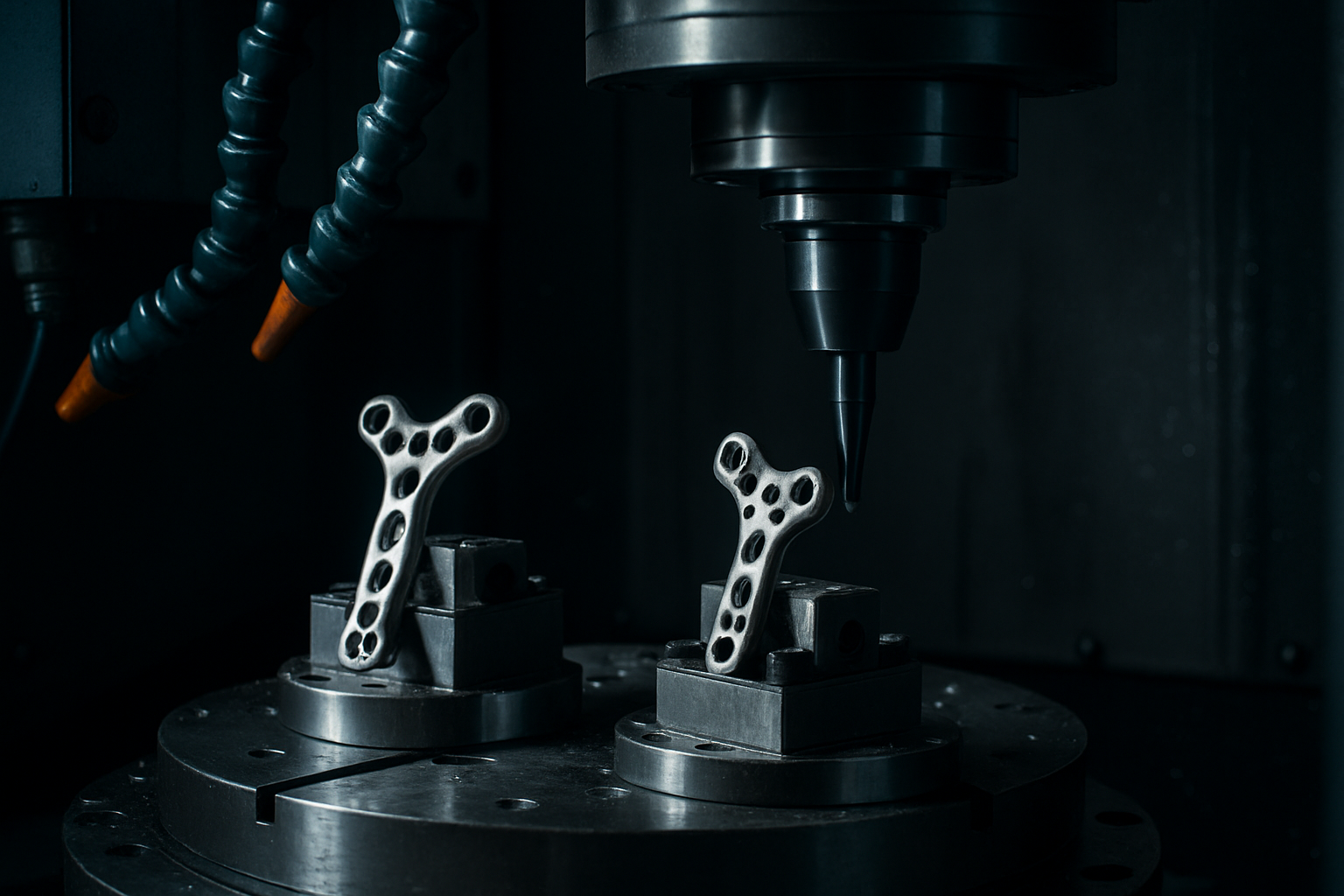
CNC Machining for Medical Devices in Australia: A Comprehensive Guide
CNC machining is a cornerstone of medical device manufacturing due to its ability to produce intricate and precise components with tight tolerances. In Australia, adhering to local standards and understanding regional supply chain dynamics are crucial for success.
Choosing the Right Material
When selecting materials for your medical devices, consider both biocompatibility and mechanical properties. Aluminium 6061 is cost-effective, lightweight, and easy to machine, making it ideal for prototype development or low-cost production runs. For parts that require high strength and corrosion resistance, such as surgical instruments, Stainless Steel 316 is a robust choice. Titanium alloys offer superior biocompatibility and durability but come with higher costs due to material prices ranging from $500 to $800 per kilogram.
Key Specifications for Medical Device Components
- Tolerances: Precision machining capabilities must meet or exceed ±0.1 mm for critical dimensions.
- Surface Finish: A smooth finish of Ra 0.4 µm is often required, especially for implants and surgical tools where aesthetics and hygiene are paramount.
- Lead Times: Rapid prototyping can be achieved with a lead time of approximately two weeks for small batches, while larger production runs may take up to eight weeks.
Avoid Common Mistakes
- Underestimating Material Costs: Be aware that material costs can significantly impact the final price of your parts. For instance, machining titanium parts at $50–80 per hour could easily double or triple the overall cost.
- Ignoring Local Standards: Ensure compliance with AS/NZS 4819:2013 and other relevant Australian standards for medical devices to avoid costly rework or non-compliance penalties.
- Neglecting Prototype Testing: Always test initial prototypes under realistic conditions before full-scale production to catch design flaws early.
Decision Frameworks
- Choose Aluminium 6061 when cost efficiency is a priority and strength-to-weight ratio is acceptable, as it costs approximately $25–45 per kilogram.
- Select Stainless Steel 316 for applications requiring high corrosion resistance and mechanical durability. Its price range of $70–130/kg reflects its superior performance characteristics.
- Opt for Titanium alloys when biocompatibility, fatigue strength, and lightness are critical. While expensive at around $500–800/kg, titanium offers unmatched long-term reliability in medical devices.
Quick Reference: Key Specifications
- Material: Choose Aluminium 6061 (cost-effective), Stainless Steel 316 (high durability), or Titanium alloys (biocompatibility).
- Tolerance: ±0.1 mm for critical dimensions.
- Surface Finish: Ra 0.4 µm for smooth, hygienic surfaces.
- Lead Time: Prototype testing within two weeks; production runs up to eight weeks.
Immediate Takeaway
Understanding the nuances of material selection and machining tolerances can significantly impact both cost efficiency and product performance in medical device manufacturing. By adhering to local standards such as AS/NZS 4819:2013, you ensure compliance while reducing risks associated with non-compliance penalties or design flaws. Always prototype thoroughly before committing to full-scale production runs to validate your designs under realistic conditions.
This approach not only streamlines the development process but also enhances product reliability and patient safety, aligning closely with regulatory requirements in Australia.
Free quote in 2 business days. No minimum order.