Unlock Complex Geometries with 5 Axis CNC Machining
Rapid Manufacturing
Author
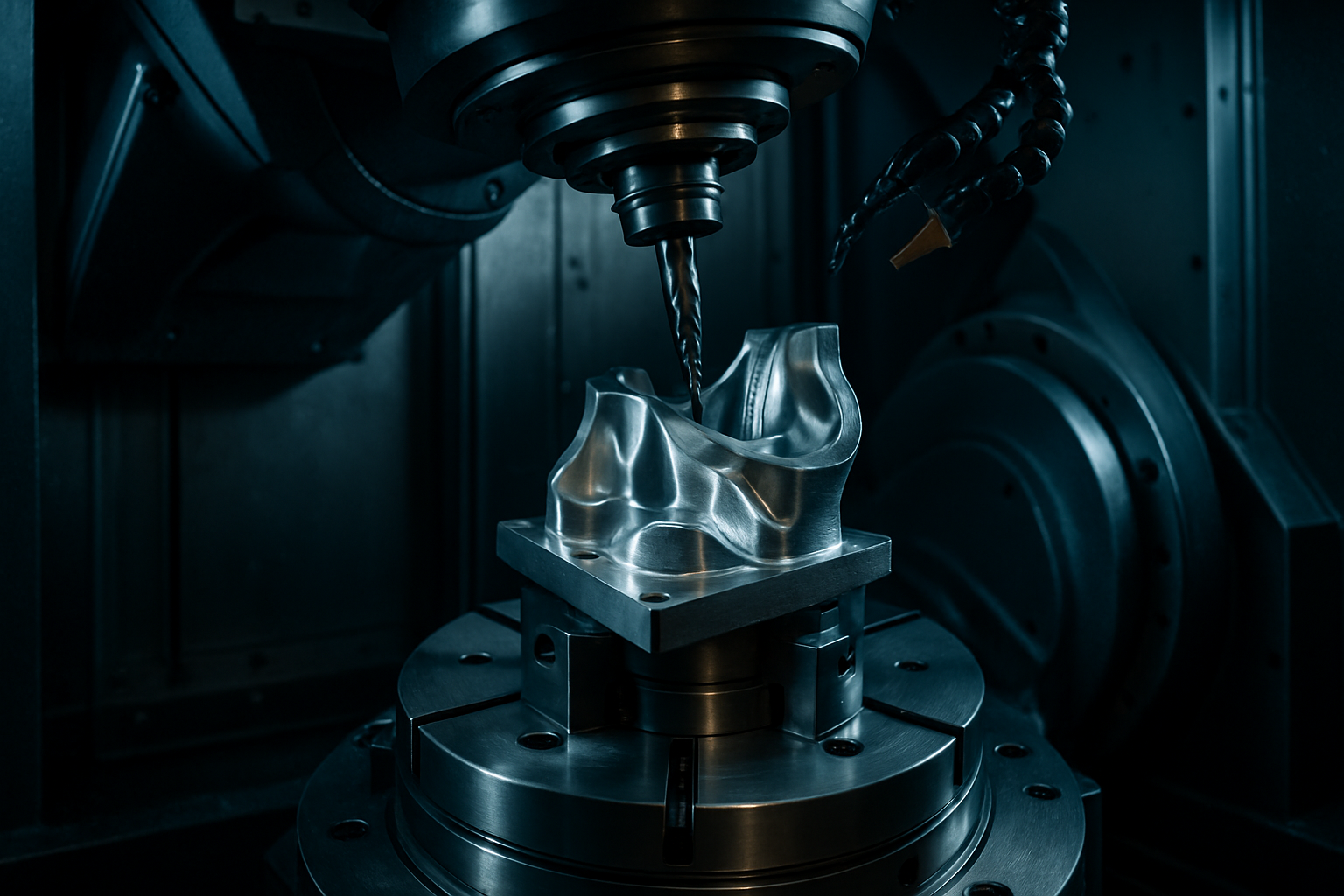
Understanding When 5-Axis CNC Machining is Essential in Australia
Australian manufacturers and engineers often grapple with the decision of whether to invest in or utilise 5-axis CNC machining for their projects. This technology offers unparalleled precision and versatility but comes at a higher cost compared to conventional 3-axis machines. Here, we will break down when this advanced machining capability becomes necessary and how to navigate the complexities effectively.
When to Choose 5-Axis Machining
The decision to opt for 5-axis CNC machining hinges on several critical factors:
- Complex Geometries: For parts with intricate geometries that cannot be achieved through conventional 3-axis machines, such as impellers or aerospace components.
- Multi-Angle Work: If your work requires machining at multiple angles without repositioning the part, reducing setup time and improving efficiency.
- Tight Tolerances: When tight tolerances are required, especially on complex surfaces. A typical tolerance for critical parts might be ±0.01 mm.
Australian manufacturers often deal with stringent AS/NZS standards that demand higher precision and quality control, making 5-axis machining an attractive option for meeting these requirements. For instance, aerospace components like turbine blades require a high degree of accuracy in multiple planes which can only be achieved through 5-axis capabilities.
Common Mistakes to Avoid
Navigating the complexities of 5-axis machining can lead to pitfalls if not approached carefully:
- Overestimating Capabilities: Relying solely on software simulations without practical testing can result in unexpected errors during production.
- Underestimating Costs: While upfront costs are high, failing to account for reduced material wastage and faster turnaround times can skew the financial analysis negatively.
- Ignoring Maintenance Needs: 5-axis machines require more maintenance due to their complexity. Regular upkeep is crucial to maintain performance and prolong machine life.
Australian manufacturers should budget for these additional expenses and factor in lead times that may be slightly longer than those of standard CNC operations, typically ranging from 2–6 weeks depending on the part's complexity.
Material Recommendations
Choosing the right material can significantly impact both cost and feasibility when employing 5-axis machining:
- Aluminium 6061: Ideal for prototypes due to its light weight and excellent machinability. Cost ranges approximately $25–45/kg in Australia.
- Stainless Steel 316: For applications requiring corrosion resistance, such as marine or food processing equipment. Expect material costs around $70–130/kg.
- Titanium: Offers high strength-to-weight ratio and durability but comes with higher machining challenges and costs ($500–800/kg).
It's important to balance the mechanical properties needed for your project against cost constraints, as titanium alloys might not always be necessary.
Quick Reference: Decision Points for 5-Axis Machining
- Complex Geometries: Consider multi-axis capabilities.
- Tight Tolerances: Evaluate ±0.01 mm precision requirements.
- Material Costs: Factor in $25–800/kg depending on the material.
- Lead Times: Budget for production cycles of 2–6 weeks.
Applying This Knowledge
When evaluating a new project, Australian engineers and procurement managers should start by mapping out part geometries and tolerance requirements. If these criteria align with what 5-axis machining can offer—complex shapes, tight tolerances, multi-angled work—then the additional investment is justified in terms of quality and efficiency.
By applying this structured approach, decision-makers can better navigate the complexities of advanced CNC machining, ensuring their projects meet both technical specifications and financial goals.
Free quote in 2 business days. No minimum order.